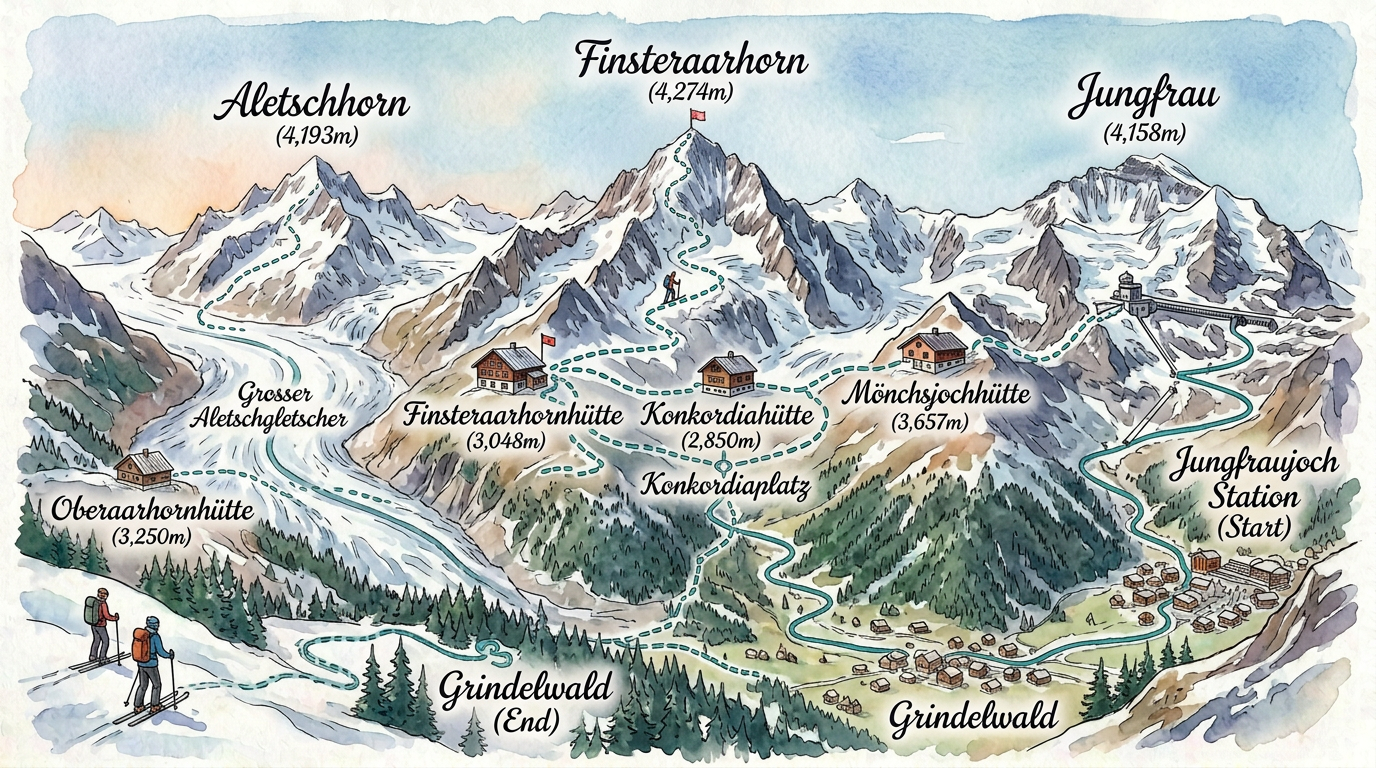
Interlaken
568 meters (1,864 feet)
Reckingen
1,316 meters (4,318 feet)
~80 km (50 miles)
~7,300m (24,00ft)
Fieschertal
1,100 meters (3,605 feet)
The Mountaineers Ski Traverse
Distance:
Total Elevation Gain:
How It Differs from Other Traverses
Unlike some of the Alps' more famous ski traverses; Haute Route, Silvretta, and Ortler. This traverse is consistently at higher altitudes and far bigger glaciers. Therefore it demands far better weather and safe avalanche conditions.
Birth of Mountain Guiding
In the late 1700s and early 1800s, as European travelers developed an appetite for mountain wilderness, they needed skilled locals to navigate dangerous terrain. The men who had survived decades crossing high passes—evading customs officials and navigating by starlight—were naturals. They formalized their knowledge, establishing themselves as professional guides for climbers and tourists. By the mid-1800s, guiding had evolved from underground necessity to respected Alpine vocation. Today's mountain guides descend from this lineage, combining centuries of accumulated high-altitude expertise with modern safety standards.
1,036 meters (3,500 feet)
Grindelwald
Notable Facts
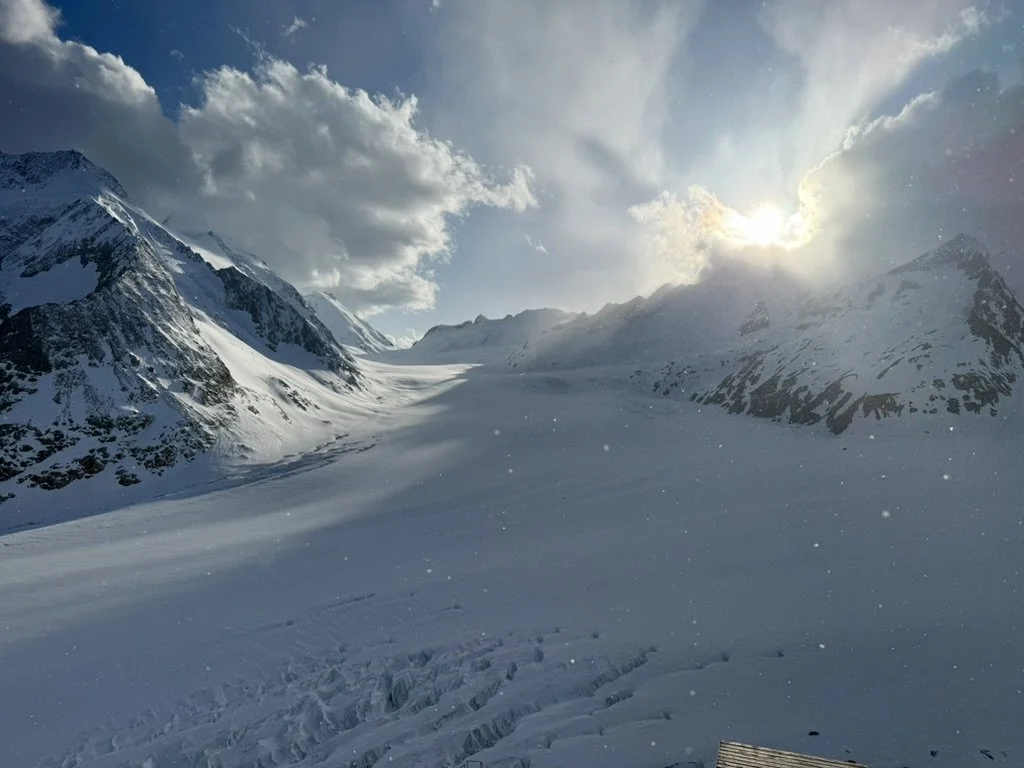
Grosser Aletsch Glacier is the longest glacier in the Alps at roughly 23 km
Home to 9 of the 82, 4000m peaks in the alps
Smuggling Era
During the 17th and 18th centuries, when tariffs made official routes prohibitive, salt, spices, and textiles moved through remote valleys under cover of darkness. Local mountain dwellers—shepherds and hunters with intimate Alpine knowledge—became expert smugglers. They learned every pass, every crevasse field, every refuge in the high country. When European tourism exploded in the 19th century, these same men (or their descendants) were perfectly positioned to guide wealthy travelers and climbers. The smugglers' detailed terrain knowledge became the foundation of the professional guiding profession.